
Terms and Service Agreements are a part of everything we do online. Most people skip them because they are long, intimidating, boring, and time-consuming, but this results in people not knowing what they agreed to. You can use the similarities between Terms and Service Agreements to read them quicker.
The First Clause
This clause basically establishes two things. The site is owned by a company, and you (or an adult if you’re under eighteen) agree to the terms by using the site. Sometimes in this clause while other times in a subsequent, the company assures you that“your privacy is their number one priority,” and encourages you to read their privacy policy, a distinct long, legal document that tells you in all the ways they can and will collect and sell your data and is also important to check out.
Definitions:
The Company then proceeds to give various definitions to establish how they use various words in the context of their document. Some common ones are Customer (who pays for the service), and User. Also, “we” tends to refer to the company while “you” refer to the user. But none of them are that important, because they are a) similar definitions to other agreements and b) usually words you’re already familiar with. Also, “definitions” sections are fairly common in other legal documents, like city ordinances, though they define different words.
Prohibited Behaviors
A bit later, they will extensively list all the different ways you must not use their product. These are pretty good to know, and directly below this, they tell you what will happen if you were to break the Agreement, which includes the cancellation of your access to the product (further elaborated on in the “Termination” section).
Limitation of Liability and Indemnification and Hold Harmless Clause:
The Limitation of Liability Agreement causes you to accept some or all of the risk for using the site. They tend to state that there is no warranty and they are not responsible for paying you for any problems caused by their service. On the other hand, the Indemnification clause does almost the opposite: it forces you to restitute the company for any damages you cause. The hold harmless agreement also causes you to waive your right to bring claims against the company as well, states Contracts Counsel.
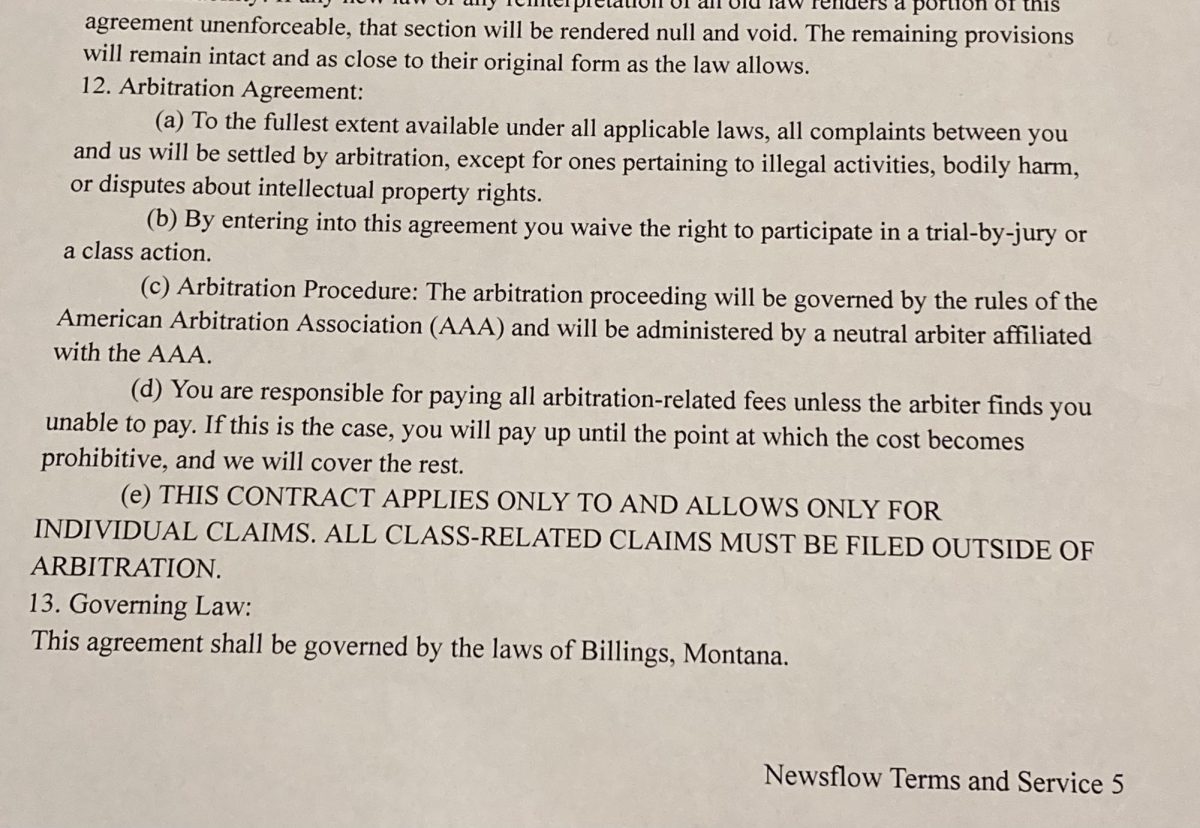
The Arbitration Agreement
Generally towards the end, the Arbitration Agreement determines how you can settle complaints against the company. Generally, a neutral arbitrator would hear both sides and resolve the dispute, but some contracts impose limitations on what you can raise as a concern. Also, most organizations including College Board will have the arbitration under the American Arbitration Association rules. Since most companies’ Arbitration Agreements seem very similar to each other, this section is not that important to read.
Other tips:
Most companies say the content on their website is owned and/or copyrighted by them and prohibit the use of that content without their permission. If you want to check a specific website’s policy, this would be under “Ownership,” “Use of Content,” or a similar title. Also, companies like to reserve the right to change their Terms and Conditions at any time. Some agreements establish that the company could alter their agreement without notice, but others like Georgia Futures, promise they will notify you if they ever make a change (and allow you to again review the terms.)







Dessa • Dec 3, 2025 at 1:58 pm
This is actually a really helpful article! Always read the fine print!