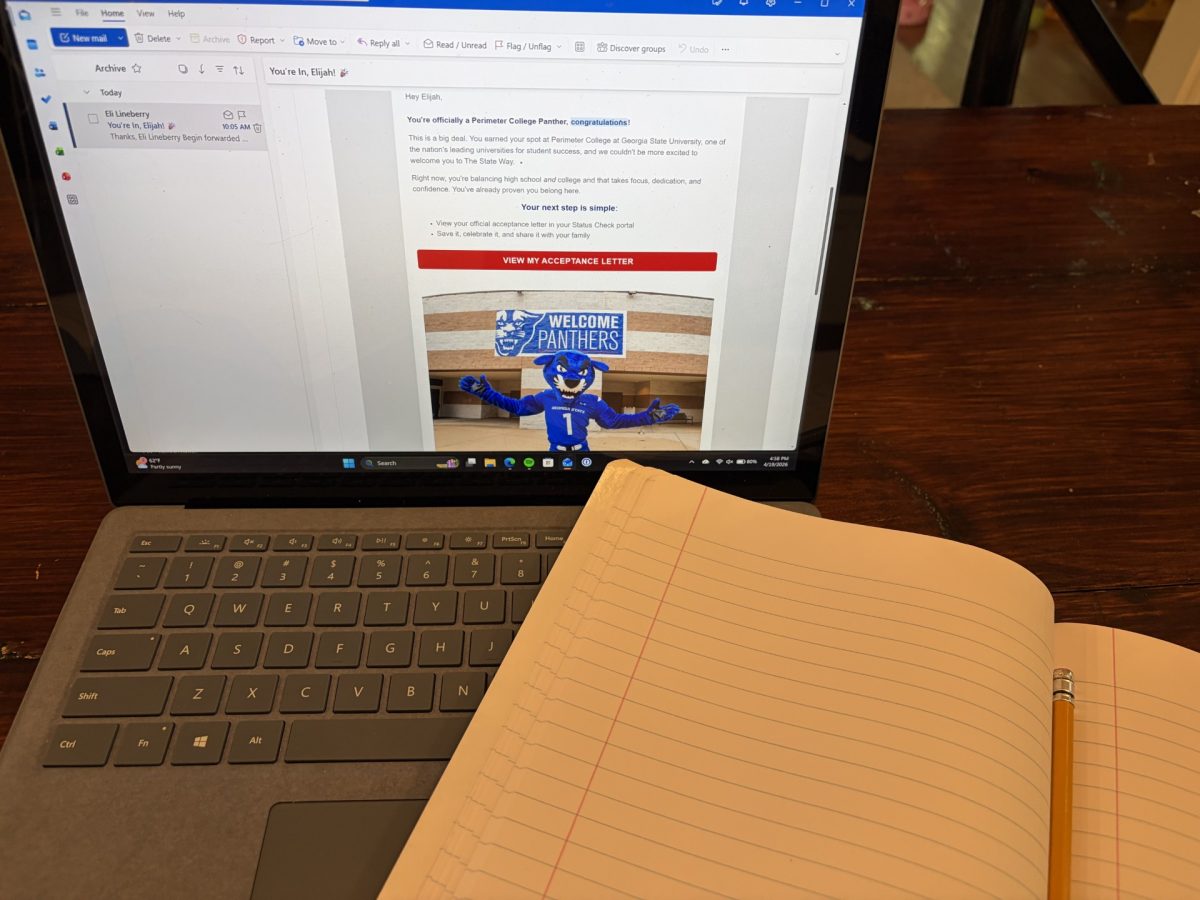
As the school year comes to a close, new classes may seem a long way off for some, but not for students taking summer dual-enrollment classes this year. The courses available during the school year can also be taken over the summer at colleges like Georgia State University, but with different course lengths and timelines. Taking advantage of these classes can open up class slots and help students pursue their interests.
“[Doing summer dual enrollment] frees up a dual class for the fall semester. Now, I can take criminal justice, and it allows me to take the first step into law school,” said Jackson Heller (‘27).
Sometimes, avoiding certain subjects is the main objective, and the chance to take more classes you enjoy is an added benefit.
“I decided to take a US history class over the summer because I heard, at our school, it was really hard,” said Madison Sullivan (‘27). “So, now I can take Photography and Draw/Paint II and have two art classes on my schedule.”
Another bonus is the GPA boost given by the college-level courses, since they’re weighted the same way as AP classes.
“I felt like it would raise my grade and get some classes out of the way,” said Daniyal Singapuri (‘26). “I chose to dual over summer because it’s not as high maintenance as opposed to during the school year.”
For some students, the appeal of summer dual enrollment is hinged on the relaxed feel of the courses and the lighter workload.
“Summer dual enrollment is shorter. Plus, I think it’s easier because it’s also summer for the [professors], so they may not be grading with the same intensity as [they would] during the fall or spring,” said Collins Crow (‘27).
As just mentioned, another major difference between summer and school-year dual enrollment is that summer classes are only three or eight weeks long and still give the same amount of credit. This gives students a chance to gain high school credit in shorter time periods.
“I’m freer in the summer; taking an eight-week course online in the summer is better than doing a year-long course,” said Crow.
However, even with the shortened class times, summer dual classes can still mess with vacation plans.
“There have been times when I had to do dual work over vacations, but I try to get most of it done before we leave [for a summer trip],” said Sullivan.
Other students enjoy these courses, as taking them keeps them productive and ready to learn when school restarts.
“I always forget things over the summer, and having something to keep me thinking about school will help keep me prepared,” said Heller.
Other students echo this sentiment, citing reasons such as how summer dual enrollment is good for maintaining productivity.
“I really enjoy [being productive] in the summer, so I sort of enjoyed having something to keep me accountable and sustain my work ethic throughout the [break],” said Sullivan.
A drawback for summer dual enrollment is the advanced application deadline; for example, students need to be ready to register for classes a whole month earlier than the fall semester applicants do at Georgia State University.
“If you want to dual in the summer, you have to decide really quickly,” said Singapuri. “[The summer application window] is way shorter; there is a lot of content [in the application] to complete in a short amount of time. You can’t just decide in March, you have to be on top of it.”
Despite the difficulties that come from the pressing deadline, students like Singapuri still see the benefits in taking summer dual enrollment classes.
“Summer dual is a good way to increase your GPA,” said Singapuri. “If you have a bit of free time, it’s a nice way to take a step forward [in your education].”