

Artificial intelligence is on the rise, developing more each day with new qualities and uses. As the companies grow and technology evolves, ChatGPT, Gemini, and Claude are becoming unique characters. As AI blurs the boundary between a useful tool and a convincing personality, many people arrive at a fork in the road: they must decide whether to keep AI at a distance or to let it into their personal lives.
As AI rises, so does the struggle with mental health. Many people today report that they or someone they know has struggled with mental health. Americans’ mental health has been on the decline for the past decade, according to a 2025 study by Harvard. As a result, the American Journal of Psychiatry reported that since 2018, more people are going to therapy than ever before. While the skyrocketing trend of mental health concerns and prevalence of AI have not been linked previously, the two topics have begun to converge: some people are turning to AI for therapy or advice, rather than going to a human therapist. Is the connection between the rise of mental health concerns and AI ultimately harmful, or could it be helpful?
Many people are skeptical or unnerved by AI’s attempt at emulating human consciousness, which may indicate that AI might not yet be an effective therapist.
“[AI] doesn’t work well with conversations; I don’t think it gives me good advice,” said Hannes Els (‘27). “I don’t think [AI] relates to human emotions that well, but I think it gets better every day.”
In order to make AI seem more human, large language models (LLMs) like ChatGPT, which are trained to converse with users in an organic and personal way, adapt to users’ communication styles as they use the AI more and more, according to IBM. This can lead to the chatbots affirming a user’s worldview and beliefs, even if their opinions are not supported by facts. For this reason, some believe that chatbots can be disadvantageous therapists.
“I don’t think people should use AI for advice because AI is trained to be biased towards you, and [it will] say things that you want to hear [so that you will continue using it],” said Sarah Fadjariza-Dumais (‘27).
Some patients in therapy require challenges to their actions or beliefs that might be hard to swallow. For example, the American Psychiatric Association states that those with narcissistic personality disorder are often sensitive to criticism. Some believe that an AI therapist affirming a user’s understanding of the world in contexts like these might further worsen their condition.
“AI tools like ChatGPT and Claude are yes-men: they always affirm what you say, which might not always be the best decision [for therapy],” said Nikolas Dyer (‘27).
Additionally, documented incidents of AI chatbots directly contributing to individuals’ mental health episodes have caused some to be hesitant to support usage of AI in therapy.
“There are unfortunately multiple cases of [suicides connected to AI],” said Dyer.
A study by the British Medical Journal details the rise in suicides and pychotic episodes that have seemed to be exacerbated by AI usage, which has lead many doctors and the families affected to spearhead an AI safety campaign in recent months.
However, these chatbots are ultimately at the mercy of their human developers, who can program bias into the AI, intentionally or unintentionally. Some believe that the companies behind major AIs cannot be trusted, and neither can the answers or advice the AI puts out.
“I don’t believe the corporations making these AI have any good intentions,” said Els.
Further, some predict that companies will jump at the chance to advertise their products to vulnerable individuals using AI tools for therapy and advice.
“As artificial intelligence will likely become more commercialized and start implementing advertisements in order to gain more revenue, I worry that could also lead to some invasive product placement,” said Dyer.
But some users report that confiding in an AI chatbot has proven beneficial. Summer Palmer (‘27) noted that occasionally, talking with AI helps her work through situations in her social life.
“I feel like my problem in a lot of situations is that I have a hard time seeing how [my actions] affect the other person… so I like how [AI] gives me another perspective and point of view,” said Palmer. “It makes me rethink my actions or situation more.”
Many also recognize that AI therapists can open the door for people who would not otherwise be able to access a therapist in person.
“[For AI therapy], all you need is a computer or your phone,” said Els. “For some people, it’s impossible to get into a therapist’s office or get someone to talk to. They may feel so much guilt or shame… that they don’t feel like they can confide in someone. And for [situations] like that, AI is perfect—it’s accessible.”
However, some students like Dyer have first-hand experience with medical professionals using AI tools to aid in aspects of patient consultation. Not only does AI tend to underperform in this context, it also can make obvious mistakes. If AI can make simple errors, people may not trust it to give sound advice for their mental health concerns.
“My doctor’s office implemented an AI transcription, and there are multiple things they got slightly wrong,” said Dyer. “I’m not sure how much I would want [my doctors] to rely on [AI].”
While AI technology might not be advanced enough yet to implement into medical contexts, some see that an AI-aided future is not out of reach.
“If [AI] gets developed correctly, I could see [its usefulness in therapy], but I don’t think [AI] will ever replace human therapists because there’s something different about how humans think—it’s so complex,” said Fadjariza-Dumais.
AI integration has been a worrying prospect for some who fear that AI will make their jobs redundant and put millions out of work. However, many people are certain that AI’s underperformance and patients’ need for human connection will ensure the employment of mental health professionals.
“I feel like [therapists’ jobs] are safe because everyone is going to trust a person [over AI],” said Caitlin Byrd (‘29). “No one is going to fully trust AI [with their health].”
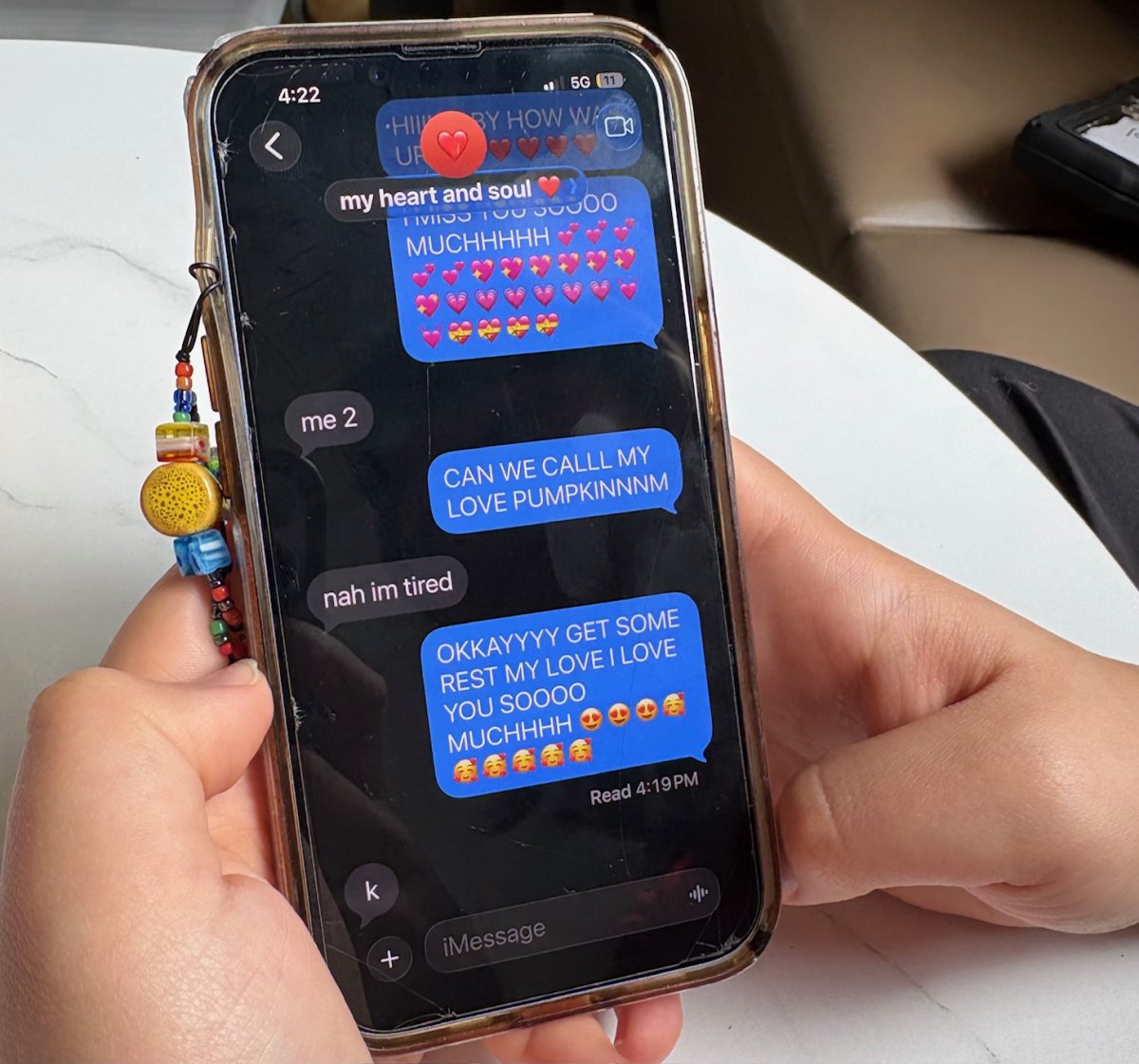
Not only do many people believe that AI cannot be effectively used as a therapist, some also believe that people should not turn to AI at all for advice or connection.
“I don’t use [AI chatbots] at all, [and] I don’t think people should,” said Fadjariza-Dumais. “You’re creating a connection with numbers—it’s not real.”
Students against AI overdependence, like Palmer, can also acknowledge that there may be factors out of one’s control that have led them down the perceived path of chatbot-misuse.
“I don’t want to judge because I feel like [people who become dependent on AI] are [using it] because they literally have no one,” said Palmer. “I wish they could find a different way, but who am I to judge?”
In stressful times, AI might be someone’s only outlet. While many Chamblee students believe that people should not use AI for therapy, many also recognize that AI misuse can be a symptom of a larger problem: Americans today are experiencing record levels of mental health issues, and they need solutions. AI might not be the answer, but one’s physical community may not be reachable.
“If you need to, use it, [but AI] shouldn’t be more than a one or two-time fallback,” said Els. “Reach out to friends; reach out to family. I know it’s scary…, but ultimately, it’ll be better.”









Omandee • Dec 13, 2025 at 1:29 pm
Great article Addy! More people need to hear about this.
Delphi • Dec 11, 2025 at 10:35 am
There should never have been a case of someone committing suicide under an AI’s guidance, and it should’ve been shut down as soon as there was. The owners of these companies do not care about people’s lives, only if they get sued or not over it.