
Writing assignments are often thought of as the bane of students everywhere; from elementary school to college, many students feel weighed down by the looming deadline of a big essay or a short written-response question.
“I don’t especially enjoy writing; I’ve always been bad at ELA,” said Nate Ray (‘29). “My first thought [when a teacher assigns an essay] is ‘Oh no’ because I [am bad] at writing.”
But why do students need to write in the first place? Some students may not see a reason for teachers assigning so much writing, but writing skills may have their benefits beyond the classroom. While a high school student does not need to be the next Shakespeare in their English classes, many believe that it is important to be able to organize and convey information in a way that is digestible in order to be successful.
“You should be able to communicate, but [your writing] doesn’t need to be extraordinary,” said Anderson Cole (‘26).
Many echo this sentiment and believe that basic writing skills are often necessary for career success as well.
“You need to be able to write at a middle school level at least,” said Noelle LaMarca (‘26). “I think you don’t have to write like you’re a scholar…, but you have to be able to [get] your point across in a way that doesn’t sound elementary [in order] to be respected or taken more seriously.”
Additionally, being a good writer can open doors for students’ future success in terms of careers and higher education.
“[Being a good writer] is good for college applications and cover letters,” said Ray. “It also helps when it comes to SATs, Milestone Assessments, and End-of-Course exams.”
These benefits may be crucial for the path some students wish to take, but that reality does not change the fact that many students still dislike writing. Students like LaMarca deem the effort and thought of writing as their greatest hurdle.
“I think that the predicted amount of work and time that goes into [writing] is what causes that initial deterrence,” said LaMarca.
On top of that, students may feel inundated with writing assignments, as writing is required in subjects such as science and history in addition to English classes. However, students do not always dislike writing; many report that once they get into the groove of writing, they come to find it enjoyable, realizing its benefits.
“When I am able to put my thoughts into words, it just feels so… satisfying,” said Lauren Gaul (‘27). “Writing [my thoughts] down makes it easier for me to know what I’m talking about.”
Many students say that writing about topics they are interested in makes assignments like essays something to look forward to rather than something to dread.
“If I like what I’m writing about…, I’m going to really have fun [writing it],” said LaMarca.
Because students have very different interests from one another, topics of writing can be more or less enjoyable to different people; some students may be geared towards scientific writing over more creative subjects.
“I kind of like [scientific writing] more because it’s about getting your point across and not having to focus on sentence structure [as much],” said Gaul. “I don’t have to be too creative with [scientific writing]; I just write my results, explain a little bit, and that’s it.”
On the other hand, some find that writing about topics they are passionate about allows them to enjoy the assignment more.
“I like opinion pieces or argumentative [essays] more because I can pull on my own knowledge, feelings, and emotions,” said LaMarca. “When I have [to write] informational or rhetorical [analysis], I have to analyze sources and bring them into my writing.”
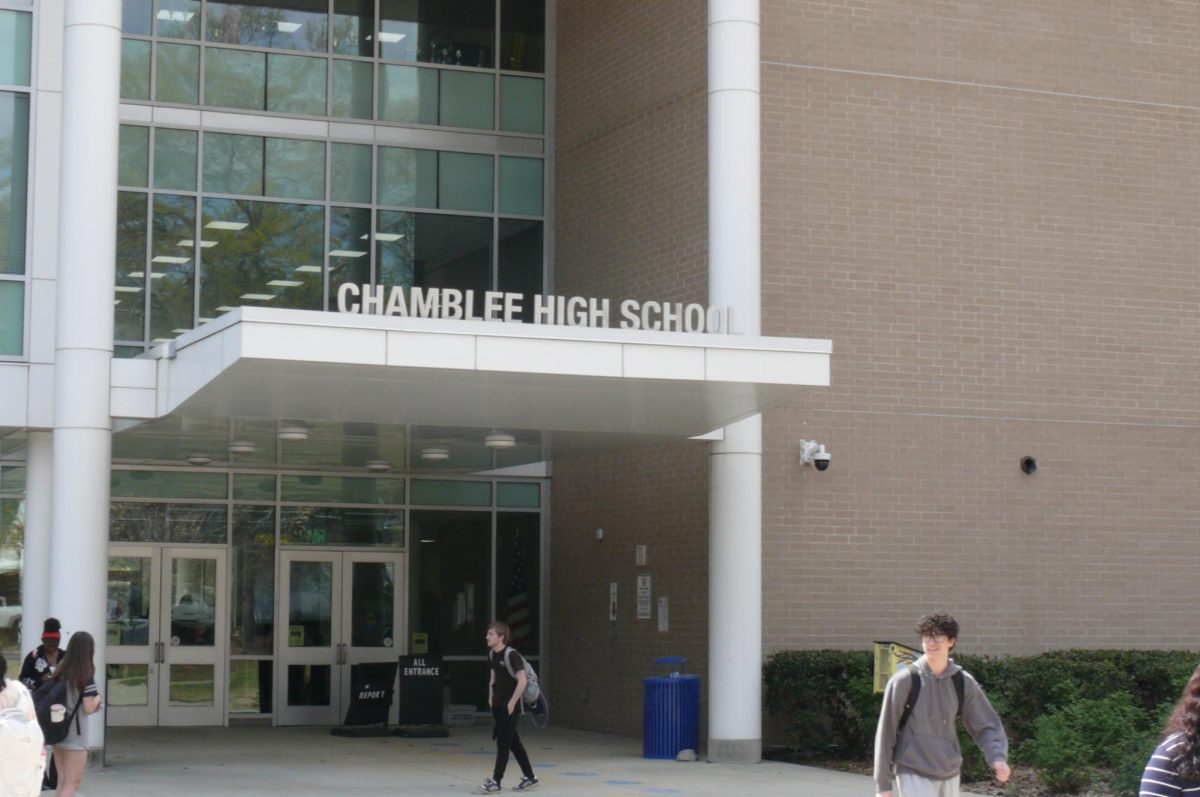
Ms. Miriam Davidow, the Writer’s Workshop teacher at Chamblee High School, has also noticed her students’ affinity for creative writing.
“[Students tend to like] the creative and the narrative [writing assignments], but what’s really been hard for them is persuasive and argumentative [writing],” said Ms. Davidow.
However, even when students enjoy the topic they are writing about, many still do not find pleasure in writing. A simple essay prompt can often seem like an impossible hill to climb for some students, but there are thankfully many techniques that students can implement into their writing process that may help them see writing as less of a chore.
“I think starting is the hardest [part of writing], especially getting past that initial writer’s block,” said LaMarca. “I like to write main ideas down, and then I try to form [my writing] around that.”
Additionally, finding the right words to convey their ideas might be a struggle for some students. LaMarca noted that reading can really help improve one’s vocabulary, making writing just a little bit easier.
“The biggest thing to make yourself a better writer is to read a lot,” said LaMarca. “I’m a very avid reader, which is how I build my vocabulary bank.”
Having a large vocabulary and being able to use words correctly is also an indicator of having strong writing skills, which many teachers aim to instill in their students.
“I’ve been trying to get [my students] to stop using overused words; I’m trying to get them to use a thesaurus [to find synonyms],” said Ms. Davidow. “I want them to be able to give more details and use a variety of words.”
Having eloquence and good writing skills can not only be useful in creative fields, but also for basic communication. Everyone will have to write at some point in their lives, and many believe that good writing skills will enhance one’s performance in almost any other aspect of life, from writing a comprehensive resume to a birthday card for a close friend.
“I think it’s important for everybody to know how to read and write. Writing is a transferable skill; you can market yourself for any job [if you are a good writer],” said LaMarca. “If you’re able to [write], you’ll be a lot more successful.”