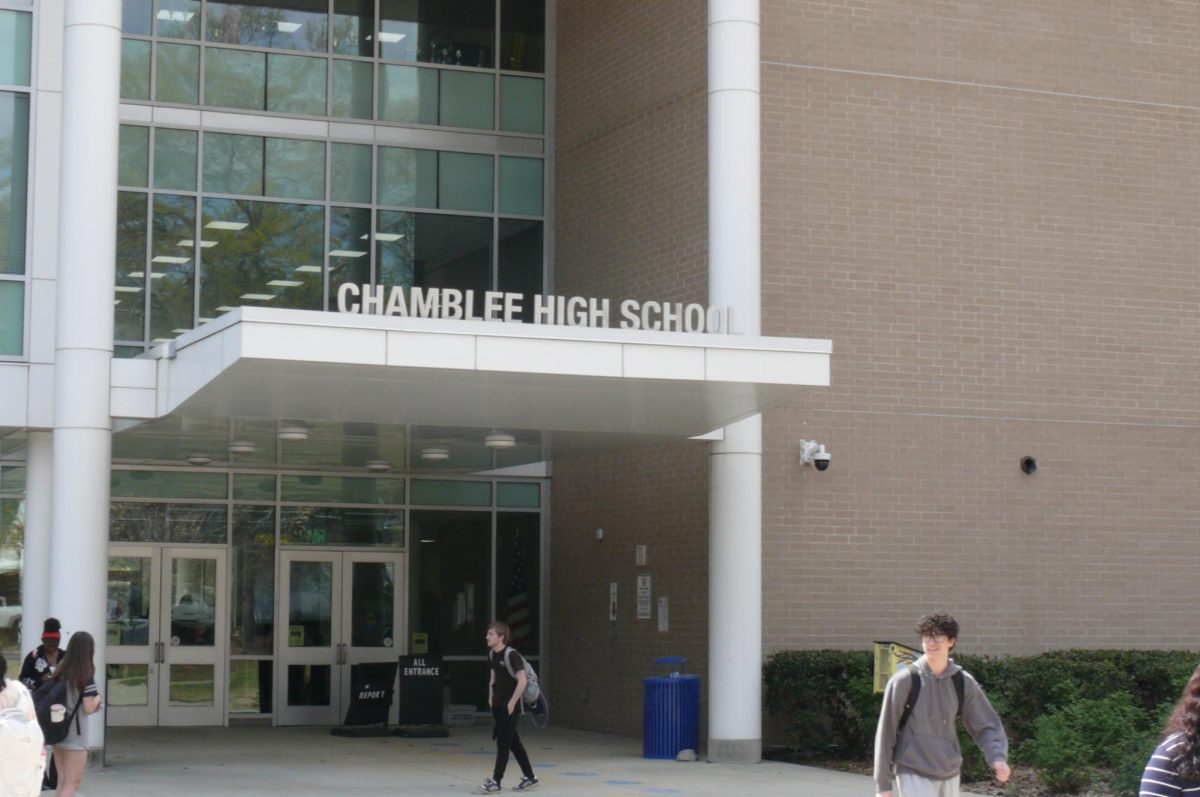
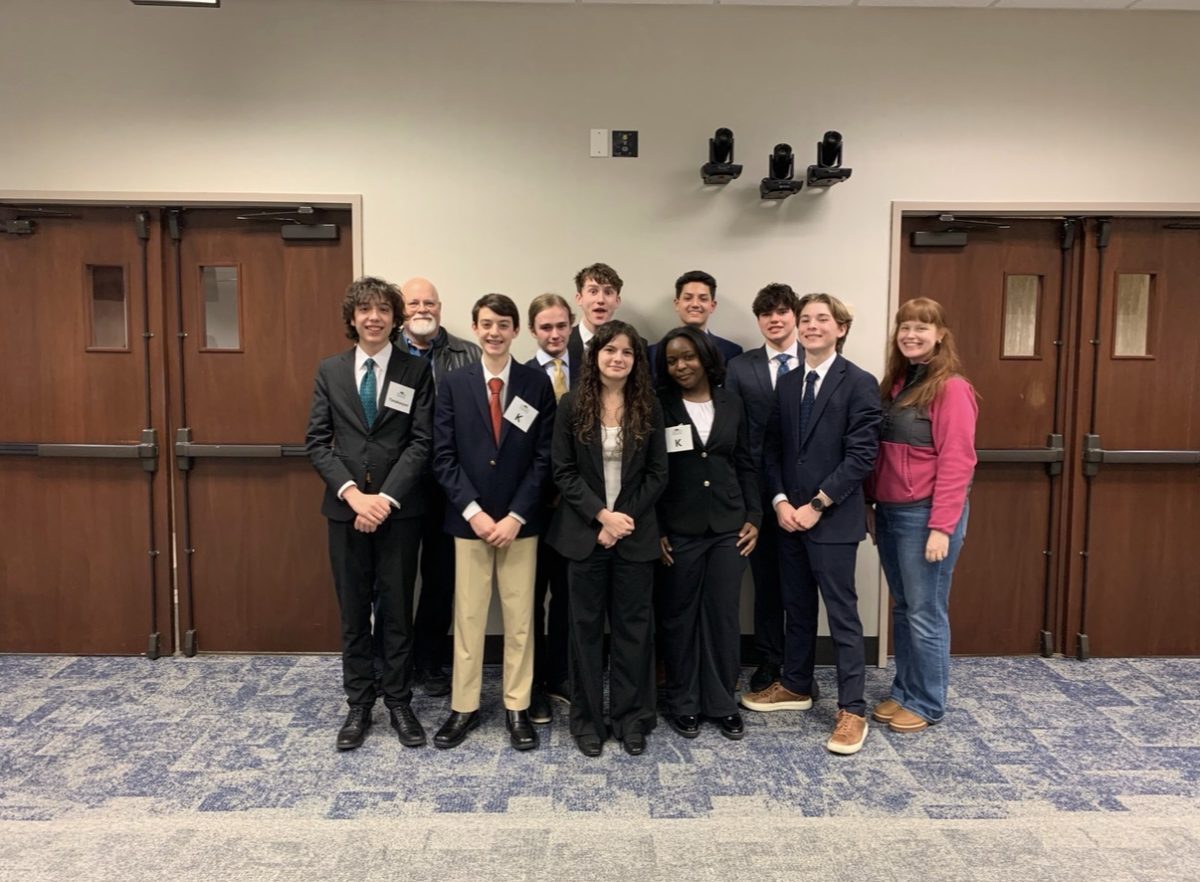
At Chamblee High School, students on the football and basketball teams aren’t the only ones advancing into competitions. Mock Trial features over 15 students who learn more about the legal system, critical thinking, and case analysis while competing against rival schools.
“Mock Trial is a competition where there are two sides, and each side is representing either the plaintiff or the defense of the case. The specific case we work on comes out in October, which is the same case for the entire state of Georgia,” said Avni Chawla (‘27).
Chamblee’s teacher sponsor, Claudia Hagan, explained that Mock Trial shares the same intensity as in many other sports, despite it not occurring on the field.
“I like to think of Mock Trial as a football team, in which you have the offense, the defense, and special teams, and special coaches that work with each one of those. I’m like the head coach, where I organize everything, and our attorney coach works with different areas,” said Hagan.
With numerous roles for students to participate in, Mock Trial has allowed many students to explore the legal system and identify their strengths and weaknesses. Through simulated courtroom conflicts, students all play different roles, such as timekeeper, witness, or attorney.
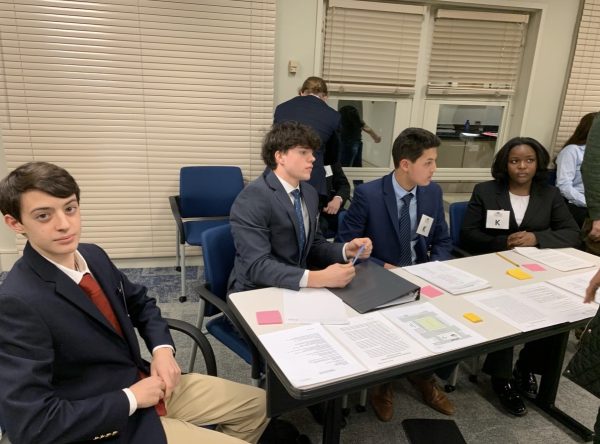
“I knew absolutely nothing about how a courtroom worked before this. Being able to actually participate and witness how it works helped it make a lot more sense to me,” said Lauren Madison (‘27). “I never knew what cross-examinations were, and [Mock Trial] really helped me understand. I’m shy, so playing roles out of my comfort zone was hard, but it let me learn a lot as well.”
This year, the club has grown, requiring two teams for both practice and competition.
“We gained a lot of new members this year under our new teacher sponsor, Dr. Hagan, which has been different but fun,” said Reed Barker (‘28).
Across the different aspects of the trial, students can experience other roles in the courtroom and deepen their understanding of the law.
“I’m an attorney, and I recently got the case from the state committee, which is 200 pages long. By doing [Mock Trial], I gain access to legal knowledge, break down fallacies and points of weakness, and develop my critical thinking and analysis skills.” said Jackson Heller (‘27).
During practice, students examine their case in depth and decide who will be on the defense or witness side. They also learn to ask the right questions and think clearly under pressure.
“The practices aren’t structured at all, but I’d say they’re very productive. We get into a group and talk about the case and what questions we might ask, while helping out our witness, telling them what we want them to say,” said Chawla.
Preparing for rival schools, students practice for additional hours to understand their case strategies, ensuring their legal arguments withstand scrutiny from opposing teams.
“We’ve had a few scrimmages this year against some good teams. Decatur is definitely one of our biggest contenders, which has been stressful,” said Madison.
Like an actual courtroom, students must be prepared for the challenging parts of a Mock Trial. The intensity of the club has proven to be one of the most complex parts for many.
“The most challenging part of a Mock Trial is being able to think on your feet. You have to be able to trust your instincts, your knowledge, and the person next to you, relying on the preparation you have. I think this can be especially difficult for folks who aren’t quite as confident in themselves,” said Hagan.
Despite the challenges, students have continued to come back to participate, wanting to learn more about the state and federal legal systems the competition is based on.
“My favorite part of Mock Trial is delivering an opening or closing argument, which is basically a speech. Here, you don’t have to deal with objections, which is normally the hardest part,” said Madison.
Overall, many students find Mock Trial to be a fascinating extracurricular that deepens understanding of the inner workings of a judicial court.