
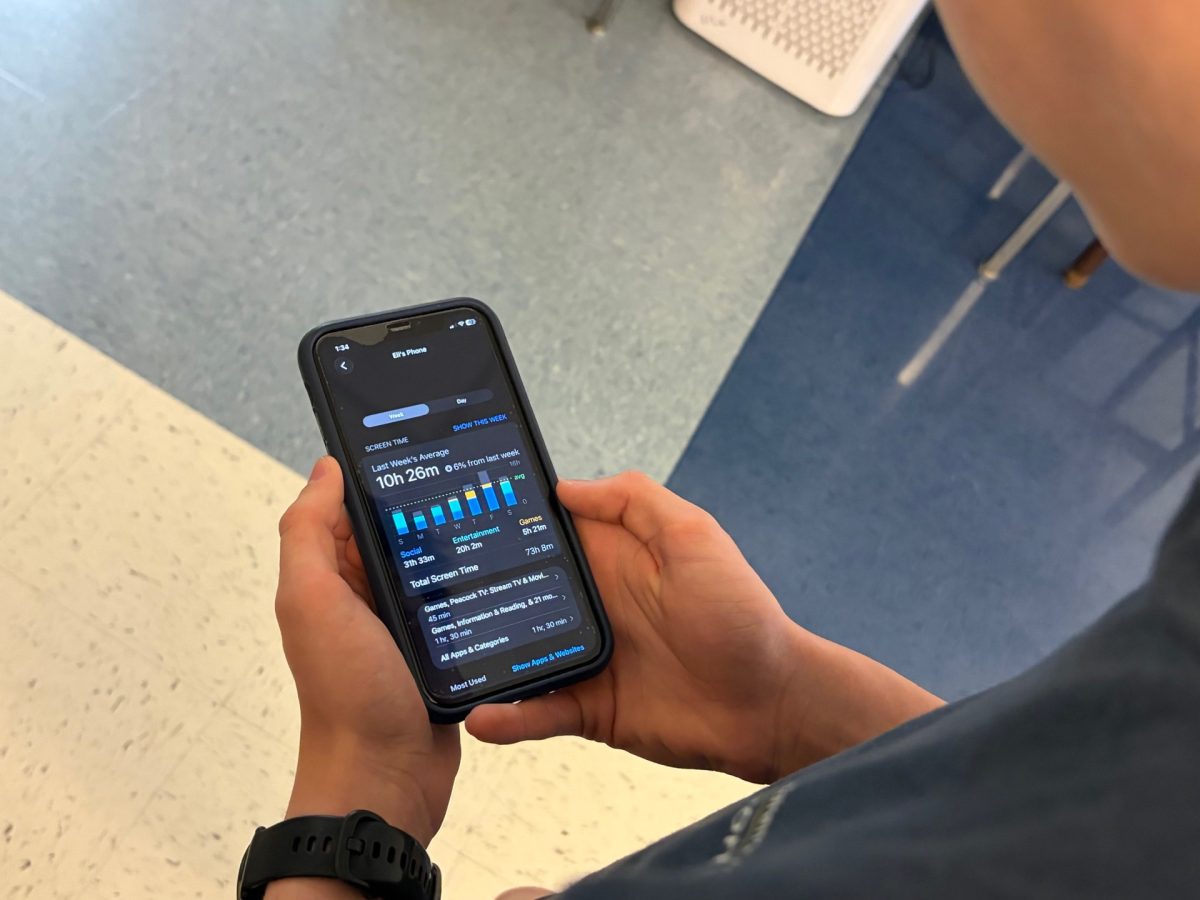
One of the first things teens often reach for in the morning is their phone to check the latest text or social media update. Since the release of the iPhone in 2007, screens have been used to foster connections around the world. Yet, what began as a tool for connection has now become an addiction, disrupting the lives of many teens today. Acknowledging the struggle, Chamblee High School students are balancing the thin line between addiction and healthy use.
“If I’m being honest, I probably spend around eight hours a day either on my phone or another screen. The majority of my time is spent on communicating, such as apps like Messages or Snapchat,” said Talia Rubel (‘27).
With so much screen time, a few students have noticed adverse effects on both their mood and health.
“I find that it’s hard to focus after I’ve been on my screen for too long doomscrolling,” said Karthik Vishwanatham (‘26). “I feel fried mentally, and sometimes get a mild headache.”
According to a 2025 article published by the National Public Radio (NPR), a correlation was shown between an increase in screen time and depression symptoms. Reflecting on this, Lawson Rosslow (‘29) explained his experience facing the negative implications of screen time and mental health.
“I feel distant from my friends when I spend too much time on screens. I’ve struggled with sports injuries and have had a lot of surgeries this year, and consequently have been on screens frequently,” said Rosslow. “I’ve spent a lot of time in bed and on social media, which has made me feel not only left out, but also sad.”
When it comes to schoolwork and productivity, screens have become a major obstacle.
“For the most part, I’m pretty good at doing my homework without my phone,” said Maddox Thomas (‘26). “However, sometimes I’ll be on my phone before doing my homework, which ultimately prolongs my productivity.”
Screens are not just used outside of schools; they are also used during the school day. Many students reported that a majority of their screen time comes from during the school day..
“Teachers could do a better job of avoiding screen use. At the beginning of class, students must put their phones in a pouch. Towards the end of class, many teachers allow students to call their parents or play games during free time,” said Rosslow.
However, not all students have had a negative experience with screens. For some, screens are not only a way to promote connection, but also to learn and discover.
“I’ve learned a lot of new things from social media. While scrolling, some of my favorite videos I’ve watched have featured new animals or foods,” said Blaire Thomson (‘29).
Excessive screen time, whether deemed positive or negative, has taken over students’ lives. Acknowledging this, some Chamblee students are trying to regain control of their digital habits.
“I have some screen time limits that go off when I’ve been on an app for a certain amount of time,” said Jessel Martin (‘29). “For the most part, I’ll be on my phone until I have to do something.”
For some students, time limits aren’t enough to resist the temptation of being on screens. Mary Lawton Jones (‘27) explained her practice of abandoning her phone to reduce her late-night excessive screen time.
“I don’t sleep with my phone in my room, and instead leave it in the kitchen. When I was younger, my parents set our screen time limit to 9 or 10 p.m. Now, I’ve grown accustomed to leaving my phone outside and have continued the practice,” said Jones.
Rather than relying on parental restrictions, some teenagers are choosing to regulate their own screen time and feel confident in doing so.
“When I’m on my phone, I’m constantly thinking about how much time I have been scrolling. This tactic prevents me from being on my phone for hours, and reminds me that I may have something more productive to do,” said Mona Taylor (‘29). “I also participate in a lot of activities such as karate and volleyball, and try to focus on my academics.”
Ultimately, many students know that screens are extremely dominant in their lives, and sometimes require intention and outside help.
“Have someone else set the limits for you,” said Vishwanatham. When you’re scrolling, you are constantly searching for dopamine, encouraging you to scroll for another 15 minutes and ignore a time limit.”