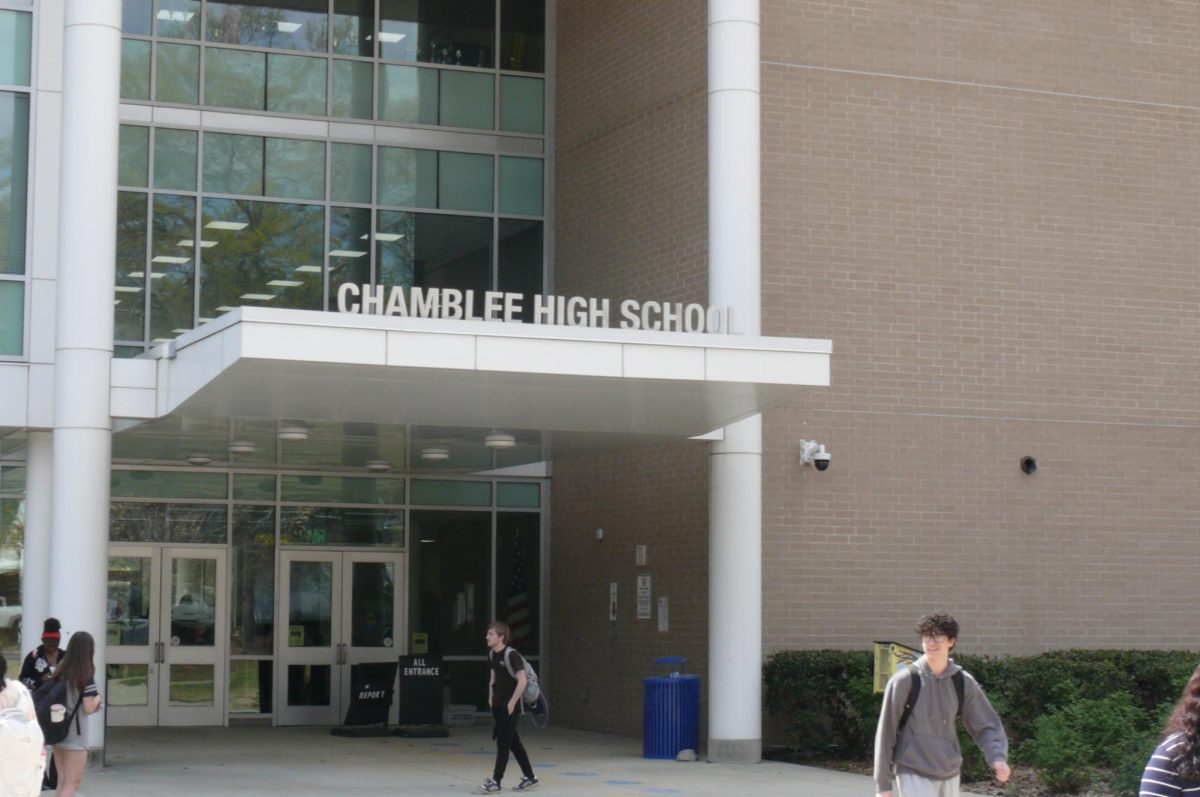
Traveling internationally can expose people to cultures, traditions, languages, and cuisines vastly different from that of the environment they reside in. Many students from Chamblee have had the opportunity to explore and learn more about the world through their international travel experiences.
Starting in the Middle East, Hawa Khan (‘27) has visited Pakistan many times throughout her life, as she was born there. Pakistan is home to a wide selection of entertainment, from big cities to even bigger mountains.
“We went on a lot of nature hikes, and we went to the Pakistani mountains,” said Khan.
The ancient landmarks of a country are usually a staple of its culture. Pakistan is full of statues and temples that can be prime tourist destinations.
“We saw Buddhist statues and Buddhist carvings in the mountains, which were nice,” said Khan.
The way a city is built is usually a representation of the surrounding culture; Pakistan is known to have its own style of housing across the country, contributing to its own uniqueness.
“The infrastructure is very shiny,” said Khan. “The Pakistani houses are like those modern houses that look like boxes.”
The social norms in Pakistan are said to be much different from those in the United States, due to the heavy influence of religion.
“Pakistan is a Muslim country, and it’s definitely more conservative in [terms of] religion than in America,” said Khan. “When I [visited Pakistan], I [had] to act differently compared to America.”
Because Pakistan is far away from America, there are differences in food, disease, and bacteria that many Americans may not be adapted to yet.
“Don’t drink the water because you might get a disease. I got a really bad stomach bug,” said Khan. “Also, only go to the area meant for tourists. You can explore a little bit, but don’t go anywhere crazy unless you think you can handle it.”
Vietnam is another popular tourist destination. It is known for having the world’s largest cave, Hang Son Doong. Colin Walker (‘26) is very fond of Vietnam for many reasons.
“It was gorgeous and a really cool experience,” said Walker.
Walker said the people in Vietnam were a positive aspect of the trip because they had a very warm attitude towards tourists.
“[The] locals were incredibly friendly, and happy to try and speak English with foreigners,” said Walker. “Those who didn’t actually speak any whipped out phones on sight to try and say hello through a translator.”
Vietnam has a lot of traditions stemming from its culture; many are unique and different from those in the United States.
“The culture was incredibly different, but I think the most notable parts were how people traveled and how they bought things. Even in supermarkets, you were expected to haggle,” said Walker.
Vietnam has a population of 101 million people, while the US has 360 million people and is also 30 times larger than Vietnam. This led to cities not being the most spacious.
“Comfort seemed to be less of a priority for the cities I was in; everything was definitely crammed together. However, the places that weren’t crammed together were gorgeous and green,” said Walker.
Vietnam is also known to be more modest, and tourists say it’s important to remember to respect this culture when visiting Vietnam.
“[My advice for] anyone who wants to visit is to remember that revealing clothing is highly frowned upon for both men and women, and people will judge you in public,” said Walker.
Shifting to the Americas, Mexico is a popular tourist destination in North America due to its location and climate. There are many unique activities to do there that are less accessible in the US.
“I got to swim with dolphins,” said Lauren Gaul (‘27).
However, the infrastructure is often frowned upon by tourists because of the use of “half-lanes” in Mexico, where people can pass others by using the shoulder of the lane.
“The roads are very uncontrolled, with little to no lights or signs. It is very confusing and nerve-wracking for tourists,” said Gaul.
Students also raise concerns about wealth inequality in Mexico; the standard of living seems visibly different for tourists and locals.
“The hotel was nice, but there was a big gap between the places for tourists and the places for locals in terms of wealth. Local homes seemed small and underdeveloped,” said Gaul.
From Mexico to Pakistan, and everywhere in between, there are so many cultures to explore and learn about. Travel is a great way to emerse in new environments and see left from someone else’s point of view.